

110V DC and 220V DC motorized ball valves and butterfly valves are used in thermal and hydro power plants. They operate from the power station’s auxiliary battery supply.
The DC system supplies operating power for control signalling, relays, switchgear tripping and closing, emergency motors and important auxiliary valve systems.
Why Are 110V DC and 220V DC Motorized Valves Required?
Power-station auxiliary supplies use battery packs rated at either 110V DC or 220V DC. A valve connected directly to this supply needs to match the available DC voltage, rather than a 220V AC or 24V AC/DC supply.
Alternating Current vs Direct Current
Alternating current (AC) reverses direction periodically. It is commonly used in homes and businesses and can be transformed to different voltage levels. The source frequency is typically 50 or 60 hertz, depending on the region.
Direct current (DC) flows in one direction. Batteries and DC power supplies provide this type of power for electronic devices, battery-powered equipment and industrial processes requiring a steady DC supply.
Sensoware Motorized Valves Running on 110V DC or 220V DC
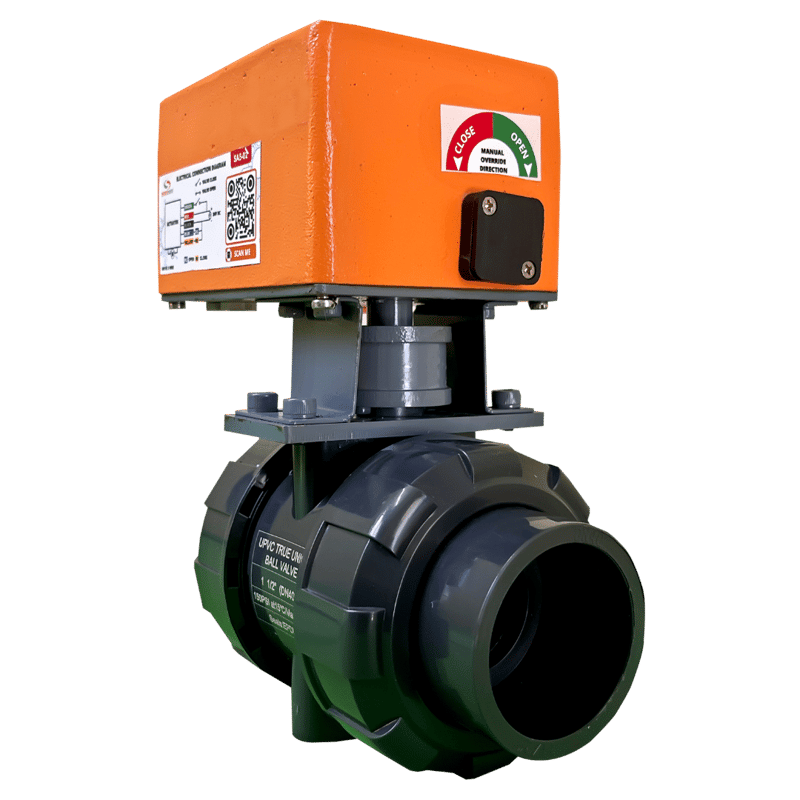
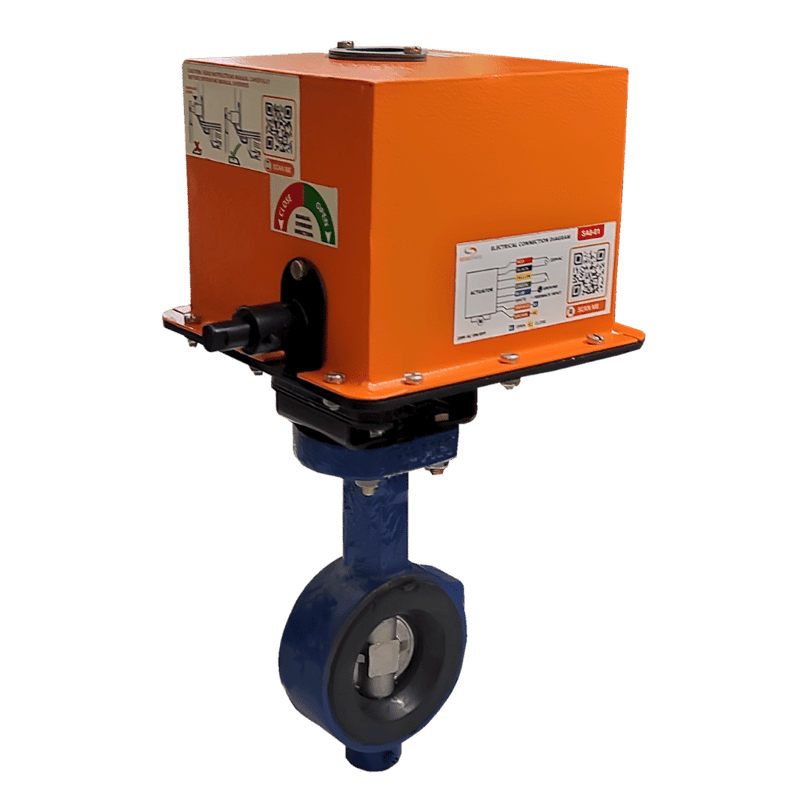
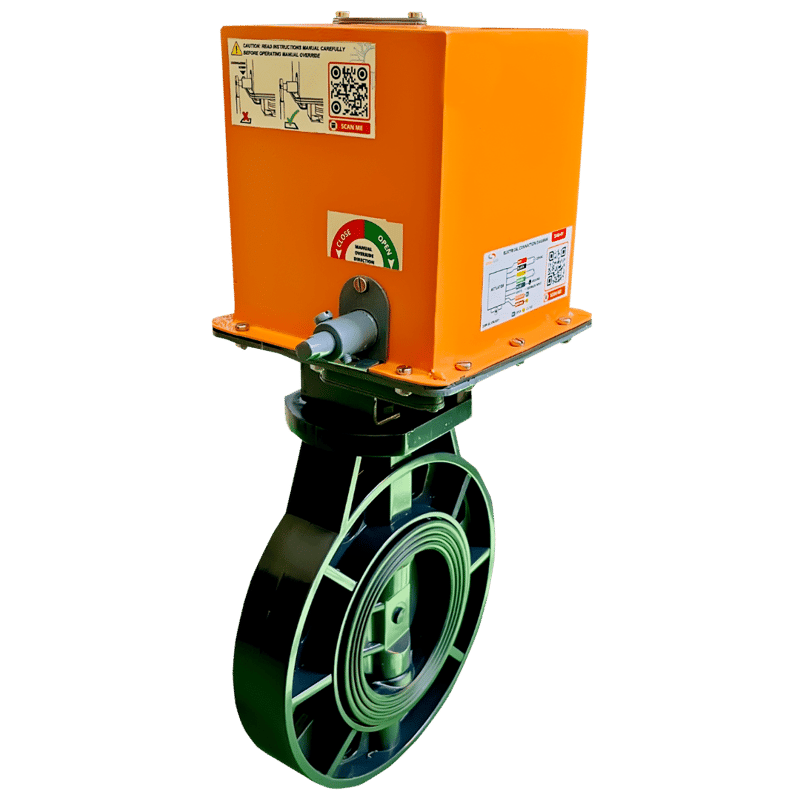
Sensoware offers motorized ball valves and butterfly valves designed to operate on 110V DC or 220V DC.
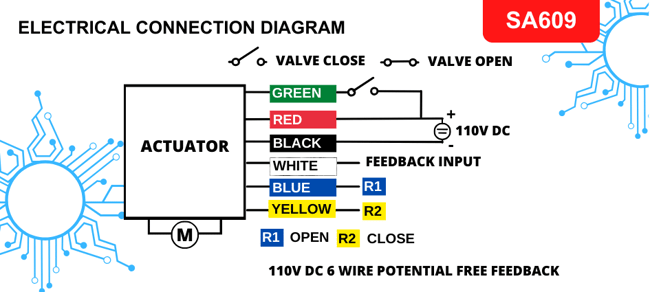
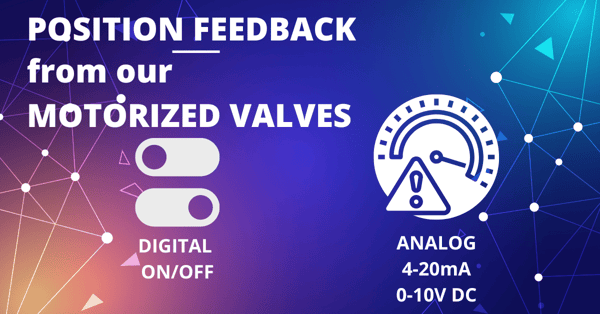
Potential-free feedback output is available to indicate valve status and support further automation integrated with the valve system. Actuated ball valves and butterfly valves can be supplied with ON/OFF or floating options, including inching operation.
Electrical Circuits for 110V DC and 220V DC Actuated Valves
220V DC ON/OFF Electrical Circuit
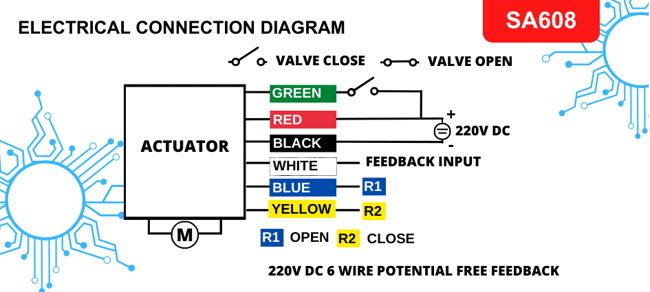
110V DC ON/OFF Electrical Circuit