Current input
Direct-acting4–20mA
Closed4mA
50% travel12mA
Fully open20mA
SA406 circuit24V DC supply · 4–20mA analog input
Wiring guide 

Sensoware manufactures motorized modulating control valves for industrial flow regulation. Match an electric actuator and valve to your process for controlled positioning between fully closed and fully open.
A compatible control signal tells the actuator how far to move the valve stem. Common options are 0–10V DC and 4–20mA. Feedback helps the actuator reach the requested position; actual flow also depends on valve design and system conditions.
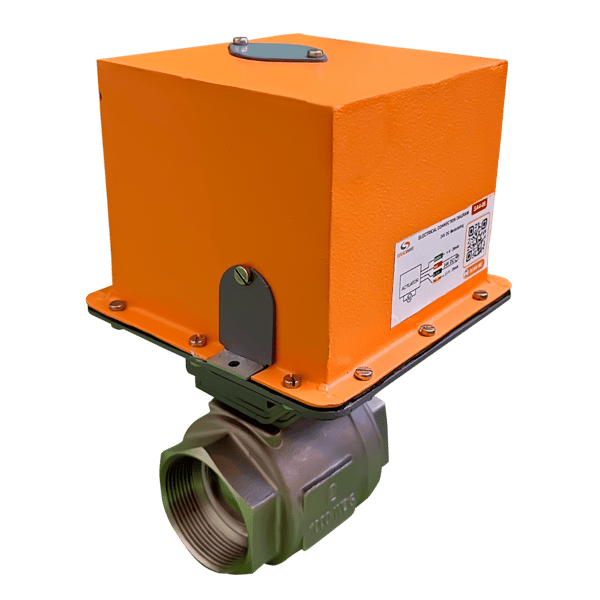
One position command. Controlled valve travel. Match your PLC analog output to the actuator input for proportional positioning.
50% travel means 45° rotation on a quarter-turn valve. It does not mean 50% flow. Actual flow depends on valve geometry, trim, pressure drop and the system.
Check input type, action direction, calibration, signal reference and PLC output loading. Do not connect a current output to a voltage-only input.
The 24V DC specifications above apply to SA406 and SA407 circuits, not every valve. Match the circuit to the supplied actuator; disconnect power before wiring.
Position feedback, where supplied, reports position. Actual flow control needs suitable flow measurement and a controller strategy. Confirm signal-loss and power-loss behavior.
Command values shown assume direct-acting calibration. Confirm the selected actuator configuration before ordering or installation.
Ball, butterfly and plug valves use a quarter-turn motion. With a compatible modulating actuator, the valve can be positioned between 0° and 90° rather than only at its end positions.

Standard ball-valve flow does not change evenly with rotation. Control applications may require a characterized port, a suitable valve trim or other application-specific selection.
The rotating disc changes the opening through its travel. Confirm the valve’s flow characteristic and usable control range for the system pressure and required flow. Explore motorized butterfly valves and confirm modulating actuator availability.
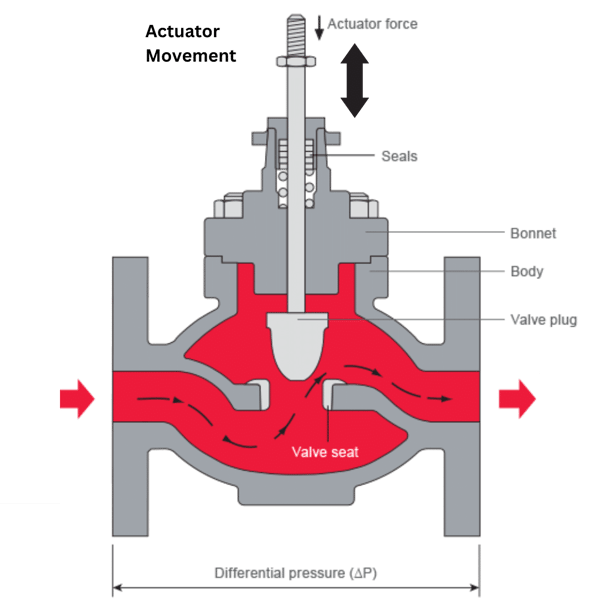
Globe valves raise or lower a plug to change the flow opening. Their construction and available trim options make them suitable for many control applications.
Needle valves provide a small, adjustable opening for fine flow control. Select pressure rating, materials and actuator performance for the particular application.
Explore how valve opening affects flow before choosing a valve for your control requirements. Move the slider to compare ball position with the illustrative flow response; the mA/V toggle changes the demo’s command units.
Calibrated to the supplied opening/flow table: 10% open → 24% flow, 50% → 87%, and 90–100% → 100%, with interpolation between points. Outlet fill height is a visual flow indicator, not the actual water level in a pressurized pipe. This demonstration curve is not a Sensoware model rating; actual flow depends on valve Cv, pressure drop and fluid properties.
In this illustrative curve, 50% opening already gives 87% flow, leaving little flow adjustment near full opening. Assess the required control range and valve sizing when selecting for precision.
In this illustrative curve, 50% opening already gives 87% flow, leaving little flow adjustment near full opening. Assess the required control range and valve sizing when selecting for precision.
Valve position is a command setting, not a guarantee of an equal percentage of flow. Confirm valve sizing and flow characteristics for the process.
Compare the rising plug with a linear flow response. In this demonstration, equal changes in stem lift produce equal changes in relative flow at constant pressure drop.
Illustrative linear trim: 10% lift → 10% flow, 50% → 50%, and 100% → 100%, assuming constant pressure drop. Installed flow depends on trim and system conditions. Outlet fill height is a visual flow indicator, not the actual water level in a pressurized pipe. This demonstration curve is not a Sensoware model rating; actual flow depends on valve Cv, pressure drop and fluid properties.
The plug lifts vertically away from its seat. This linear-trim illustration gives 25% flow at 25% lift, 50% at 50% lift, and 100% at full lift. Use the slider to compare this response with the ball valve above.
The plug lifts vertically away from its seat. This linear-trim illustration gives 25% flow at 25% lift, 50% at 50% lift, and 100% at full lift. Use the slider to compare this response with the ball valve above.
Linear flow is the selected illustrative trim characteristic, not a guarantee for every globe valve or installed system. Confirm trim, sizing and operating pressure drop for the required precision.
Different fluids, connections and control needs. Find the valve that fits your application.
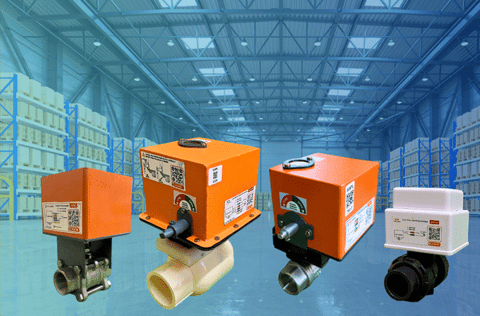
Explore ball, butterfly and multiport valves, with a choice of body materials and connections.
Browse all valves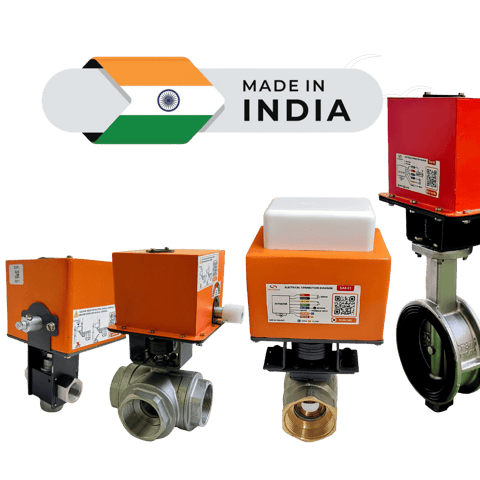
Understand valve types, actuator operation and control options before choosing your configuration.
Explore the selection guideStart with the process duty. Match the valve, wetted materials and actuator to the flow range your system needs.
Discuss flow regulation in water distribution and treatment lines.
Discuss water-flow adjustment to meet changing system loads.
Discuss liquid-flow control with materials selected for the medium.
Pipe diameter is only the starting point. Share these details so Sensoware can assess the right configuration.
Request confirmation of Kv/Cv, usable control range and actuator torque or thrust.
Fluid properties, composition and concentration.
Minimum, normal and maximum flow; inlet and outlet pressures.
Operating temperature, pipe size, end connections and environment.
Supply voltage, PLC signal, feedback and power-loss requirements.
Confirm size, pressure and temperature ratings, body and seal materials, enclosure protection and operating time for the quoted assembly. Specifications vary by configuration.
Understand the signal, choose the valve and prepare your enquiry with confidence.
Use the request-pricing form below to share your operating conditions.
A motorized modulating control valve uses an electric actuator to position a valve between closed and open in response to a compatible control signal. Intermediate positions allow process adjustment rather than only ON/OFF operation. Position alone does not determine actual flow.
For a direct-acting actuator configured for 4–20mA, 4mA commands closed, 12mA commands 50% travel and 20mA commands fully open. A compatible PLC analog output supplies the position command. The actuator also needs its specified power supply; confirm wiring, input configuration and calibration for the selected model.
Yes, when the selected actuator supports a 0–10V DC input. With direct-acting calibration, 0V commands closed, 5V commands 50% travel and 10V commands open. Confirm the signal reference and controller output before ordering; do not assume every actuator accepts both current and voltage.
No. Actual flow depends on valve geometry, trim, pressure drop and system resistance. The ball demonstration uses an illustrative nonlinear curve. The globe demonstration assumes linear trim and constant pressure drop. Neither demonstration is a product performance specification.
Compare the required flow range, pressure drop, medium and connection size. Ball valve selection needs attention to port geometry and low-opening control. Butterfly selection needs attention to disc characteristics and usable travel. Globe trim can provide a chosen flow characteristic. Ask Sensoware to confirm the available valve and actuator combination for your duty.
Provide the medium, minimum and maximum flow, inlet and outlet pressures, operating temperature, pipe size, end connections, wetted materials, actuator power supply and PLC command signal. Specify any position feedback or power-loss requirements so availability can be checked for the selected configuration.
From your PLC signal to the valve on your line, let’s match a modulating valve and actuator to your operating conditions.
Still selecting a valve? Share the details you have.