

What Is Multi-Tank Filling?
Multi-tank filling is a system for filling multiple overhead tanks with water from a borewell or sump.
Residential and commercial buildings use overhead tanks to store water. Water is pumped into the tanks by conventional or hydropneumatic pumping systems, then supplied to the occupants through the building’s pipes by gravity.
Gravity Flow vs Hydropneumatic Flow
Gravity flow stores water in an overhead tank and supplies it to residents’ taps by gravity.
Hydropneumatic flow pumps water directly from the source to residents’ taps. A pressure vessel helps the hydropneumatic system maintain a set pressure in the pipeline, without relying on overhead storage tanks.
A direct pressurized supply can be expensive to install and maintain across a large apartment building. A combined approach uses hydropneumatic pumping to fill the overhead tanks, while gravity supplies water from the tanks to the residences.
When a tank’s valve opens, the pressure in the filling line drops. The hydropneumatic pump starts automatically to maintain its set pressure.
Choosing the Motorized Valve
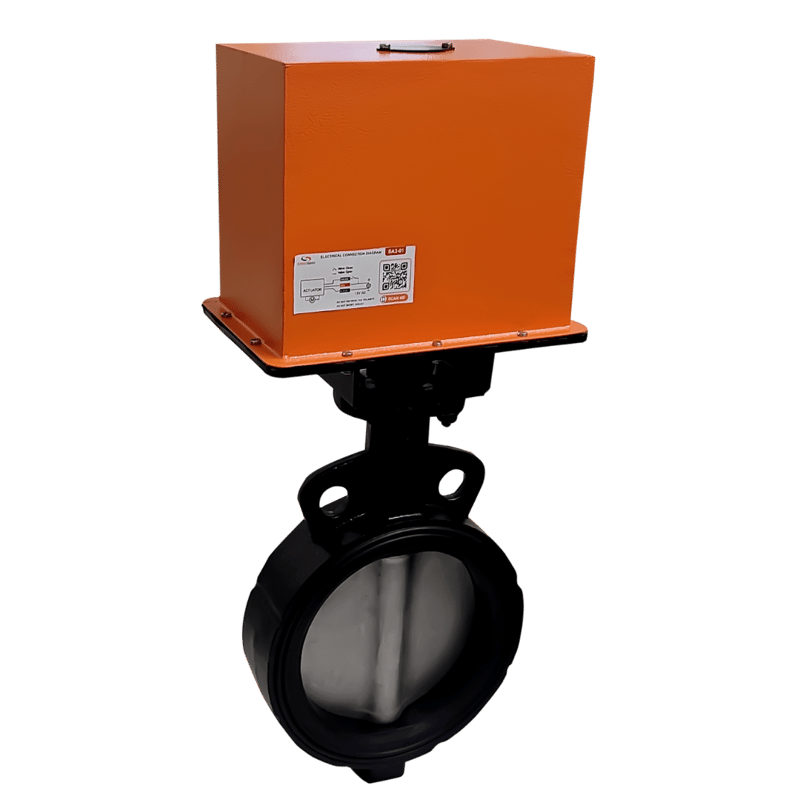
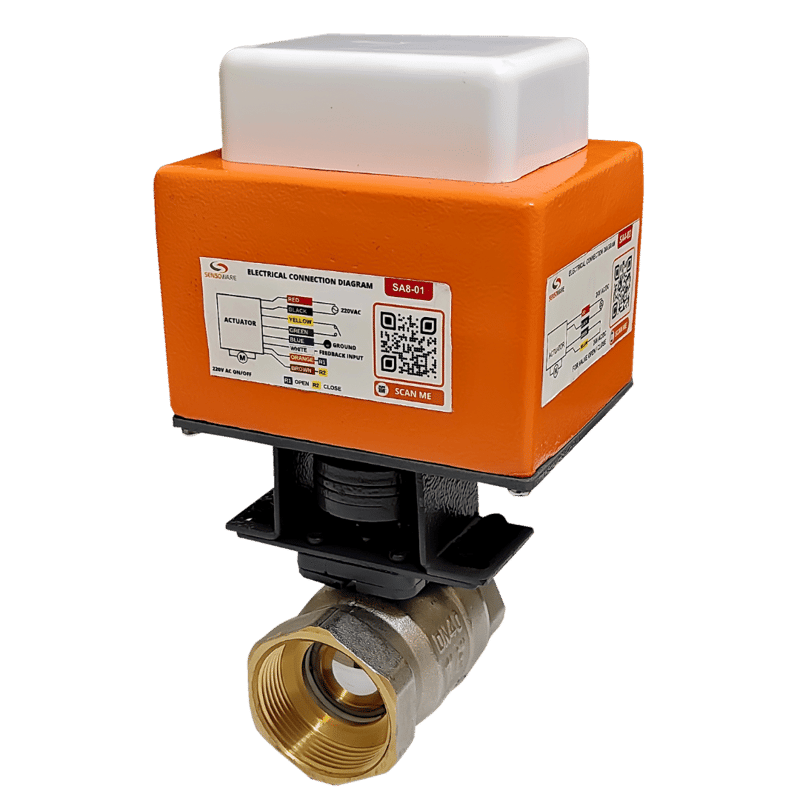
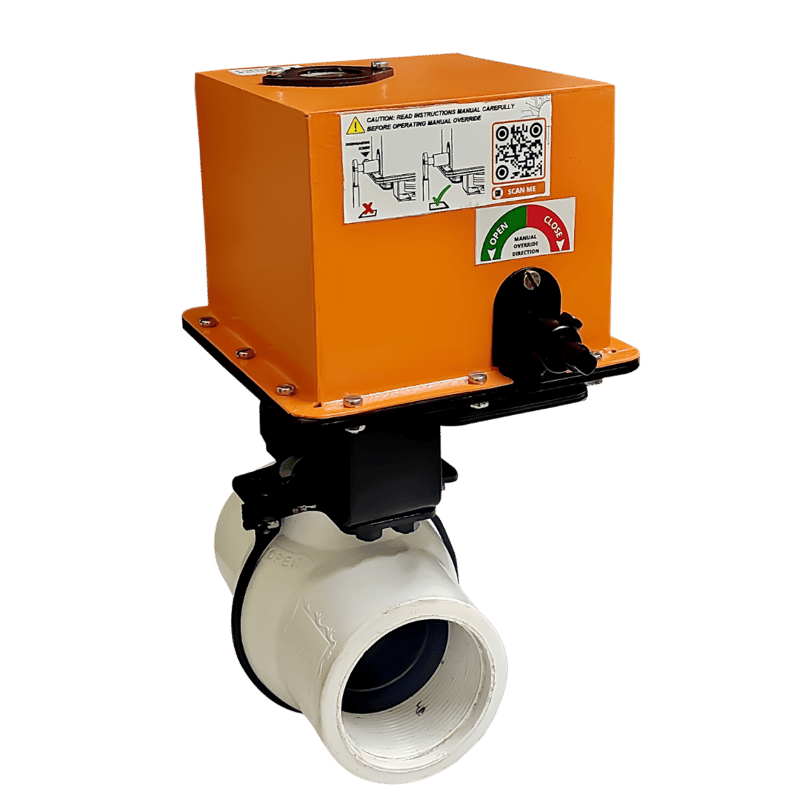
The valve connection needs to suit the pipeline size. Options described for this system include brass motorized ball valves in 25mm / 1 inch and 32mm / 1.25 inch sizes, and motorized butterfly valves from 40mm / 1.5 inches.
How Does the System Work?
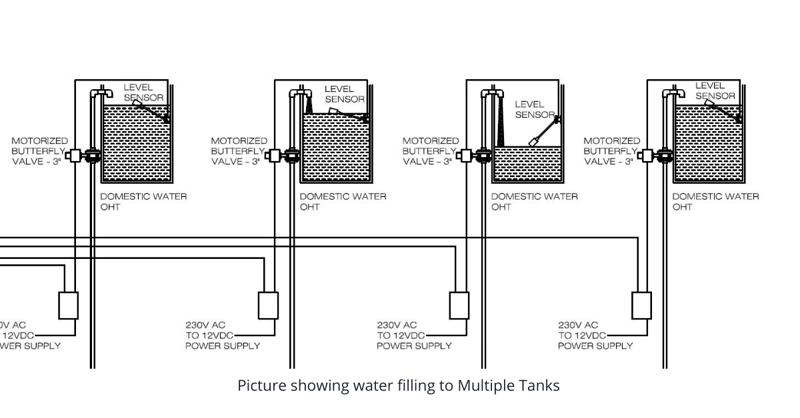
A motorized valve is installed in the filling pipeline before water enters each tank. The valve can be located on the ground floor or terrace. The system described here uses 12V operation.
Level sensors inside the overhead tank detect the low and high water levels and control the valve’s opening and closing.
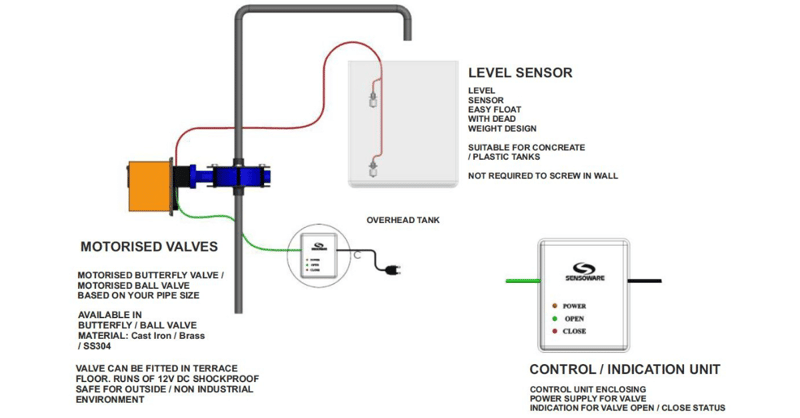
Range of Motorized Valves for Multi-Tank Filling
Level Sensor
A pair of magnetic float sensors provides low-level and high-level signals to the motorized valve. Their cables use colour-coded connections to the valve actuator.
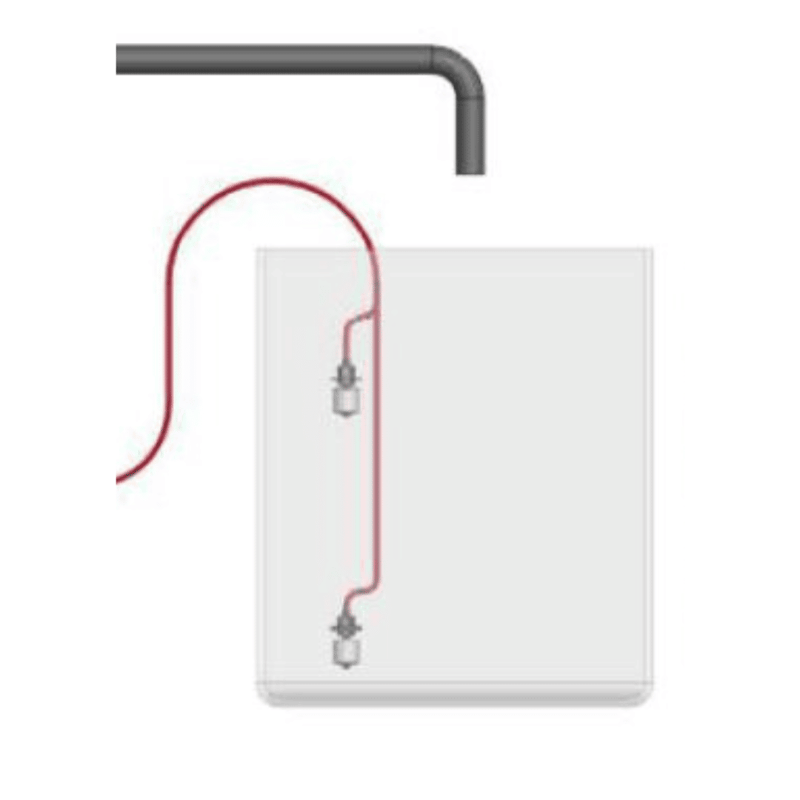
When the water reaches the low-level sensor, the valve opens. The resulting pressure drop allows the hydropneumatic pump to start through its own pressure control, without a separate tank-level command to switch on the pump.
When water reaches the high-level sensor, the motorized valve closes.
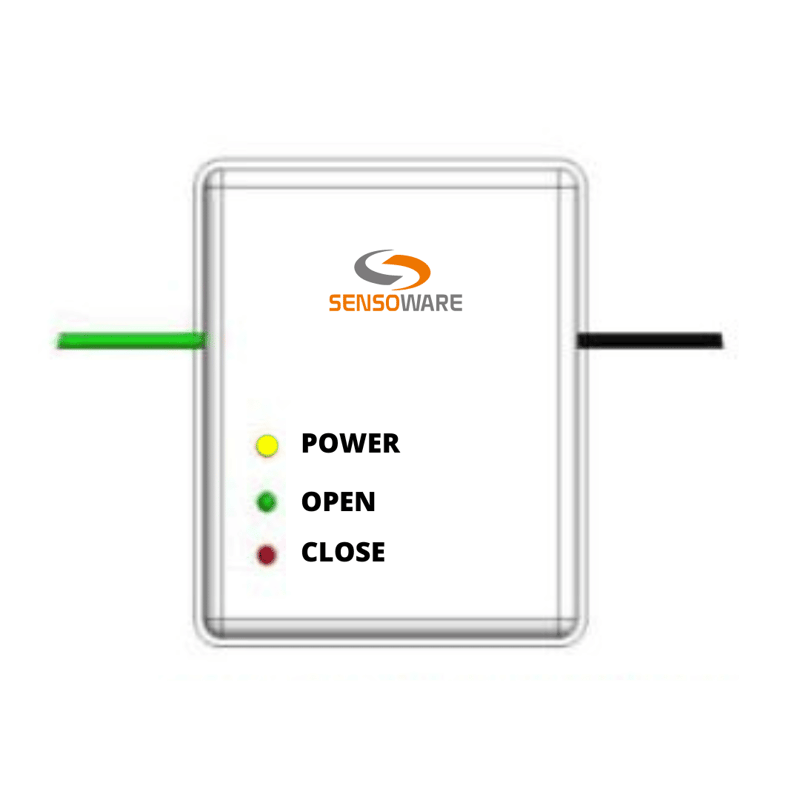
Control Unit and Valve Status Indicator
The control unit contains an AC-to-DC step-down power supply for the motorized valve. It can be mounted on the ground floor or terrace, in a sheltered position protected from rainwater.
The unit has three indications: Power, Open and Close. The Open LED lights when the valve is open, and the Close LED lights when the valve is closed.
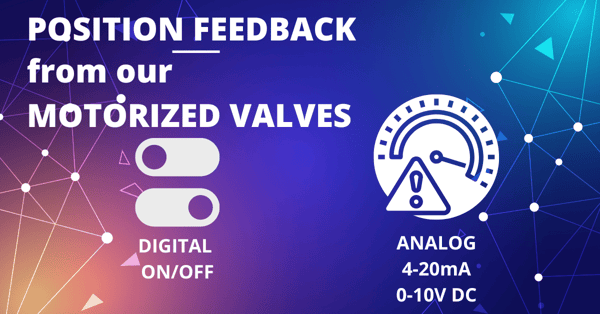
See the SA501 electrical connection documentation for an example of an electric valve with feedback.
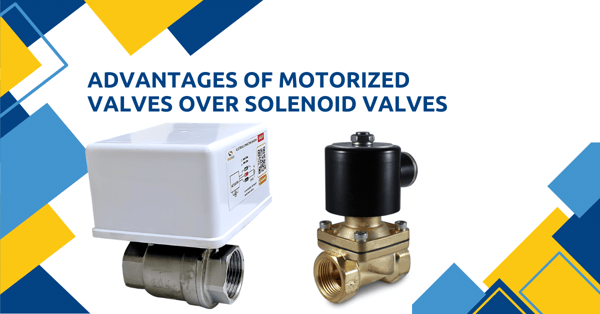
Motorized Valves and Solenoid Valves for This Application
| Motorized valve system | Pilot-operated solenoid considerations |
|---|---|
| The ball-valve design can operate without a minimum pressure differential and provides an open flow path. | Pilot-operated designs may need a minimum pressure differential and can malfunction when pressure is too low. |
| The ball-valve design avoids a small pilot hole that can trap sediments. | Dust or sediment can block the pilot passage and affect opening or closing. |
| The system described here operates at a low DC voltage. | The electrical supply depends on the selected solenoid coil; some configurations use an AC supply. |
| There is no small pilot passage to clear as part of valve maintenance. | A blocked pilot passage can leave a valve unable to open or close correctly. |
Contact us with your requirements for application suggestions and solutions.