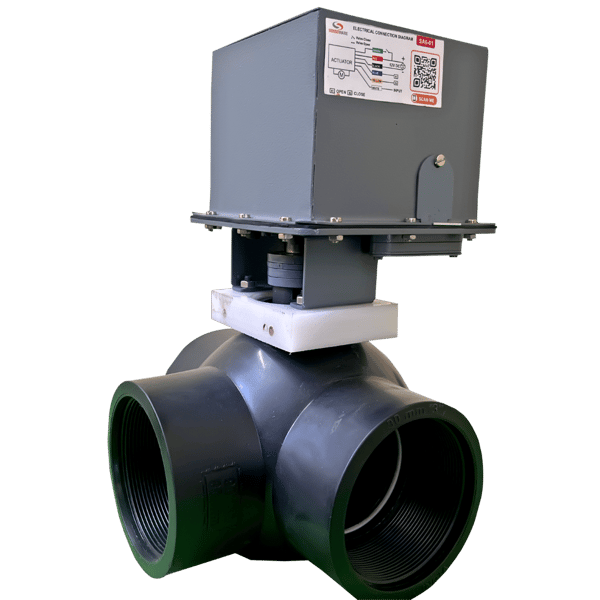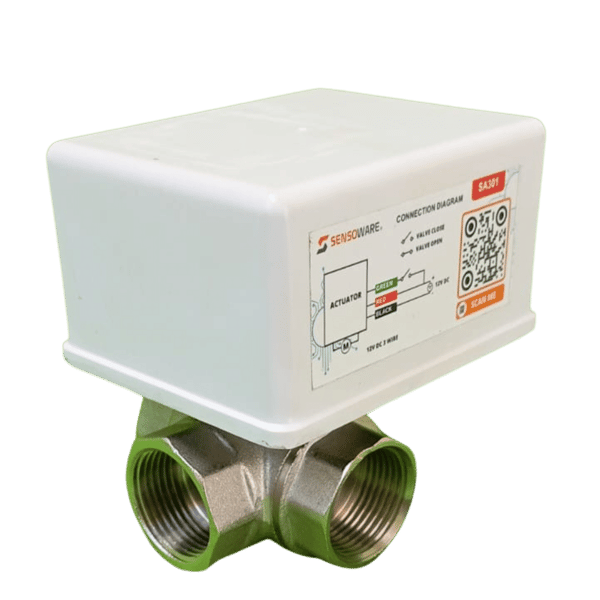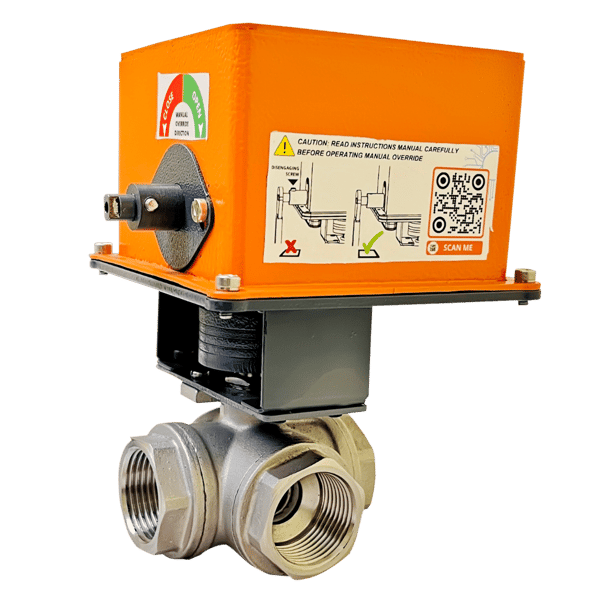

Valves play an essential role in managing liquid and gas flow in industrial systems. Motorized ball valves add automatic operation, and a three-way design provides additional options for directing flow between connections.
This guide explains how three-way motorized ball valves work, how they compare with two-way valves, and how T-port and L-port arrangements serve different applications.
What Is a 3-Way Motorized Ball Valve?
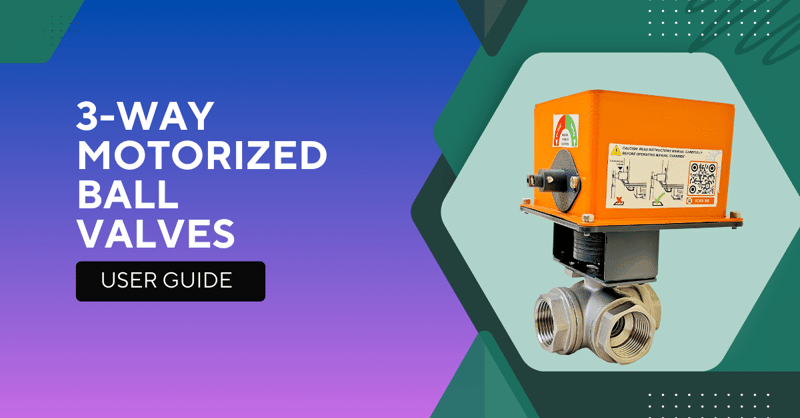
A three-way motorized ball valve uses an electric motor to rotate a ball inside a valve body with three external connections. Its main purpose is to route fluid between different paths.
Where a two-way valve controls a single flow path between two connections, a three-way valve can provide diverting or mixing arrangements, depending on its port configuration.
These valves are used in heating, cooling, water treatment and other fluid-management systems. Electric actuation automates valve movement and reduces the need for manual operation.
How Does a 3-Way Motorized Ball Valve Work?
An electric actuator rotates the ball in response to a control command. The passage through the ball determines which external ports are connected at each position.
In a T-port arrangement, the internal passage forms a T shape and can connect different pairs of ports or all three, depending on the selected configuration and actuator positions.
In an L-port arrangement, an L-shaped passage connects two ports at a time. Rotating the ball changes the connected pair, allowing flow to be directed along a different path.
Differences Between 2-Way and 3-Way Motorized Ball Valves
2-Way Motorized Ball Valve
- Function: Controls flow between two connections, typically an inlet and an outlet.
- Operation: Opens or closes the flow path through a single line.
- Applications: Suits systems that need straightforward control of one flow path.
3-Way Motorized Ball Valve
- Function: Controls connections between three ports.
- Operation: Redirects or mixes flow according to the ball passage and its operating positions.
- Applications: Suits heating and cooling circuits, mixing duties and applications requiring flow diversion.
Port Configurations: T-Port vs L-Port
T-Port Configuration
A T-port passage offers several possible flow arrangements. It can be used to mix two incoming flows or distribute an incoming flow between outlets, depending on the configuration.
The four illustrations below show the T-port configurations described in the article. The actuator arrangement discussed here moves between two positions, at 0? and 90?; the chosen port configuration determines the flow paths at those positions.
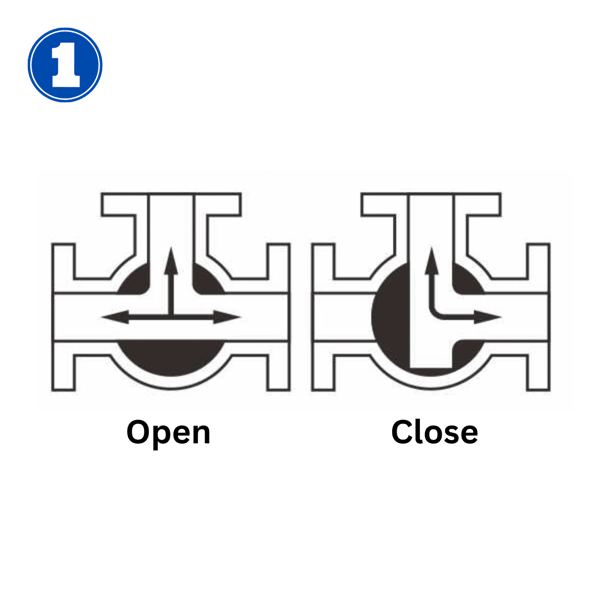
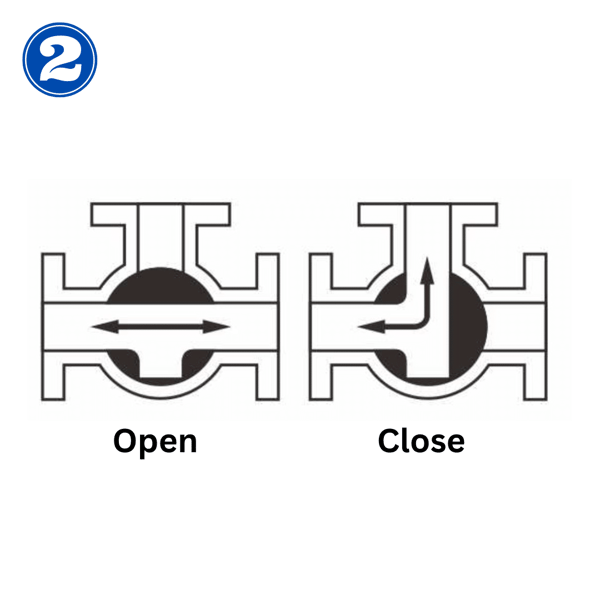
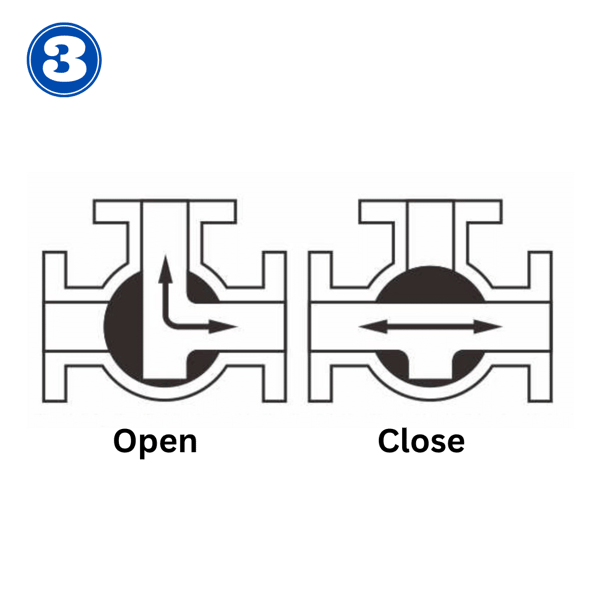
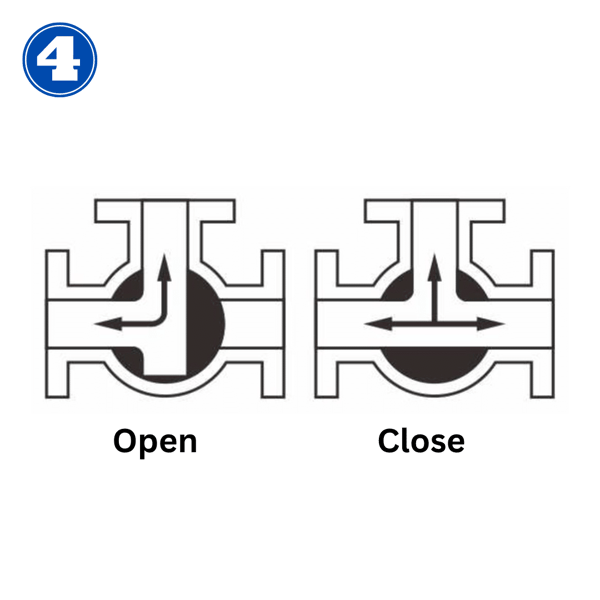
Figure 1 illustrates all three ports connected in one position and the right port connected to the centre port in the other. The remaining illustrations show alternative configurations that can be selected for the application.
L-Port Configuration
An L-port passage is useful when flow needs to be diverted between two paths without combining all three ports. One source can be directed to either of two outlets through the selected operating positions.
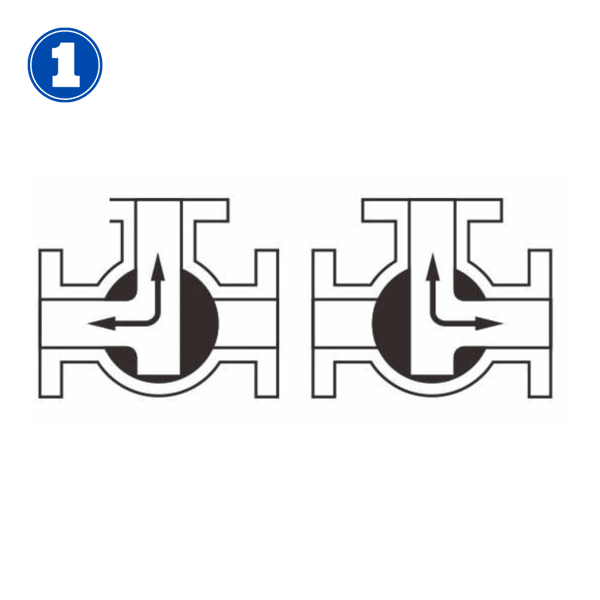
The available connections and shut-off behaviour depend on the selected porting and actuator configuration.
Why Choose a 3-Way Motorized Ball Valve?
- Flexibility: One valve can manage different flow paths in a more complex system.
- Automation: An electric actuator reduces manual operation and supports automated control.
- Equipment consolidation: A suitable three-way arrangement may replace additional valves, helping reduce equipment and maintenance needs.
Final Thoughts
Three-way motorized ball valves extend flow-control options beyond a single line. T-port and L-port configurations support different mixing and diversion duties in applications such as HVAC, water treatment and industrial automation.
Sensoware offers three-way motorized ball valves for fluid diversion, mixing and automated control. Explore the available material options below.