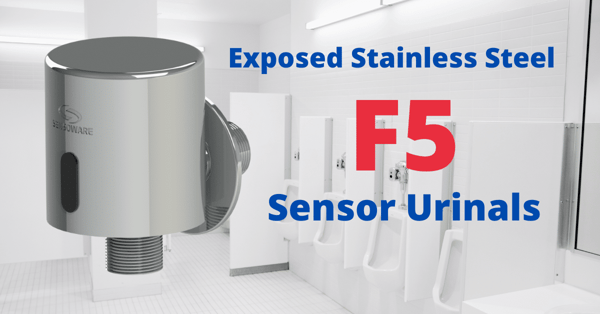

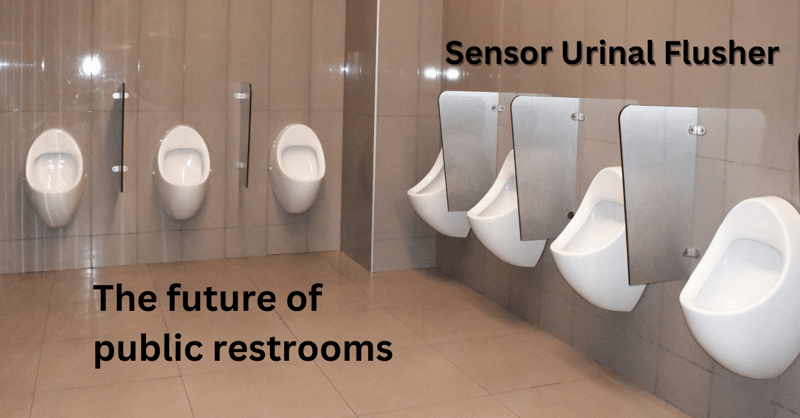
Public restrooms are changing as technology places greater emphasis on hygiene, sustainability and convenient operation. Sensor urinal flushers are part of that change, bringing automatic flushing to facilities used by many different people each day.
This article explores the role of touchless flushing in restroom design, water conservation, the user experience and connected building systems.
The Rise of Touchless Technology in Restrooms
Touchless technology has become an important consideration in public restroom design. Sensor urinal flushers use infrared sensors or other proximity-detection technologies to activate a flushing mechanism after use, without requiring the user to touch a shared control.
Removing that point of contact supports a more hygienic restroom experience. Automatic operation also makes the facilities easier to use, including for people who may find manual flush controls difficult to reach or operate.
For facility managers, the appeal combines convenience with a more consistent flushing routine that does not depend entirely on each user remembering to flush.
Water Conservation: The Environmental Impact of Sensor Urinal Flushers
Traditional urinals may use manual or timed flushing systems. Manual controls depend on users, which can result in repeated flushing or no flushing at all. Timed systems operate on a preset schedule and may flush even when the urinals have not been used.
Sensor-based flushers respond to use instead. Their flush cycle controls how much water is delivered, and models with adjustable flush settings allow facility managers to suit water use to their restroom’s requirements.
Reducing unnecessary flushing helps conserve water. Lower consumption can also reduce the ongoing cost of supplying water to busy public facilities, supporting both resource management and day-to-day operation.
Enhancing the User Experience with Sensor Urinal Flushers
Public restrooms can suffer from inconsistent cleanliness and maintenance. Automatic flushing after use helps maintain the condition of the urinal and reduce unpleasant odours, contributing to a more welcoming experience.
Sensor flushers can also complement contemporary restroom design. Their compact, modern appearance helps facilities present a consistent finish alongside other touchless fixtures.
For businesses and public facilities, a clean, convenient restroom can make a positive impression on customers and visitors and demonstrate attention to hygiene and comfort.
Integration into Smart Building Systems
In systems designed for connectivity, sensor-operated urinal flushers can form part of a broader building management system. Supported integrations may provide usage information, report malfunctions and allow settings to be adjusted remotely.
Usage data can help facility managers understand busy periods and plan cleaning and maintenance more effectively. Monitoring equipment also provides an opportunity to identify problems before they become a persistent inconvenience.
These capabilities depend on the selected equipment and its integration options; they are distinct from the basic automatic flushing function.
The Future of Sensor Urinal Flushers
Possible future developments include more advanced water-conservation controls, intelligent cleaning functions and real-time usage analytics. Such features could help facilities operate their restrooms more efficiently while improving the user experience.
Sustainability may also encourage designs compatible with greywater recycling or alternative water sources. These are potential directions for product and system development, rather than features shared by every sensor flusher.
As the technology develops, its role may extend beyond automatic flushing to contribute more broadly to cleaner, more resource-conscious public facilities.
Conclusion
Sensor urinal flushers bring together touchless operation, controlled water use and convenient automatic flushing. Connected systems can add monitoring and management capabilities where supported.
For facility managers, business owners and public institutions, these technologies offer practical ways to improve restroom convenience and resource use while meeting changing expectations for cleanliness and sustainability.